Propp was seen to analyse hundreds of fairy tales over the years and he came to the conclusion that every one of them tends to contain the same 7 characters. This still applies with characters in modern day films.
Hero - seen as the main character who looks to travel on a journey seeking a reward
Villain - referred to as the antagonist is seen to struggle with the hero
Princess - can be seen as the victim or a reward for the hero
False Hero - attempts to steal he limelight of the hero and take the princess for himself
Helper - supports the hero throughout the story and saves the hero just at the right time
Donor - supplies the hero with something special such as a weapon
Dispatcher - sends the hero on a quest at the start of the film
Friday, 15 September 2017

Schizophrenia Personality Case Study - Split
The film Split (2017) uses a character suffering with schizophrenia who has 24 different personalities each individual to there own. Not all of these characters are shown in the film but those that are can be used a great examples for similar characters we may use.
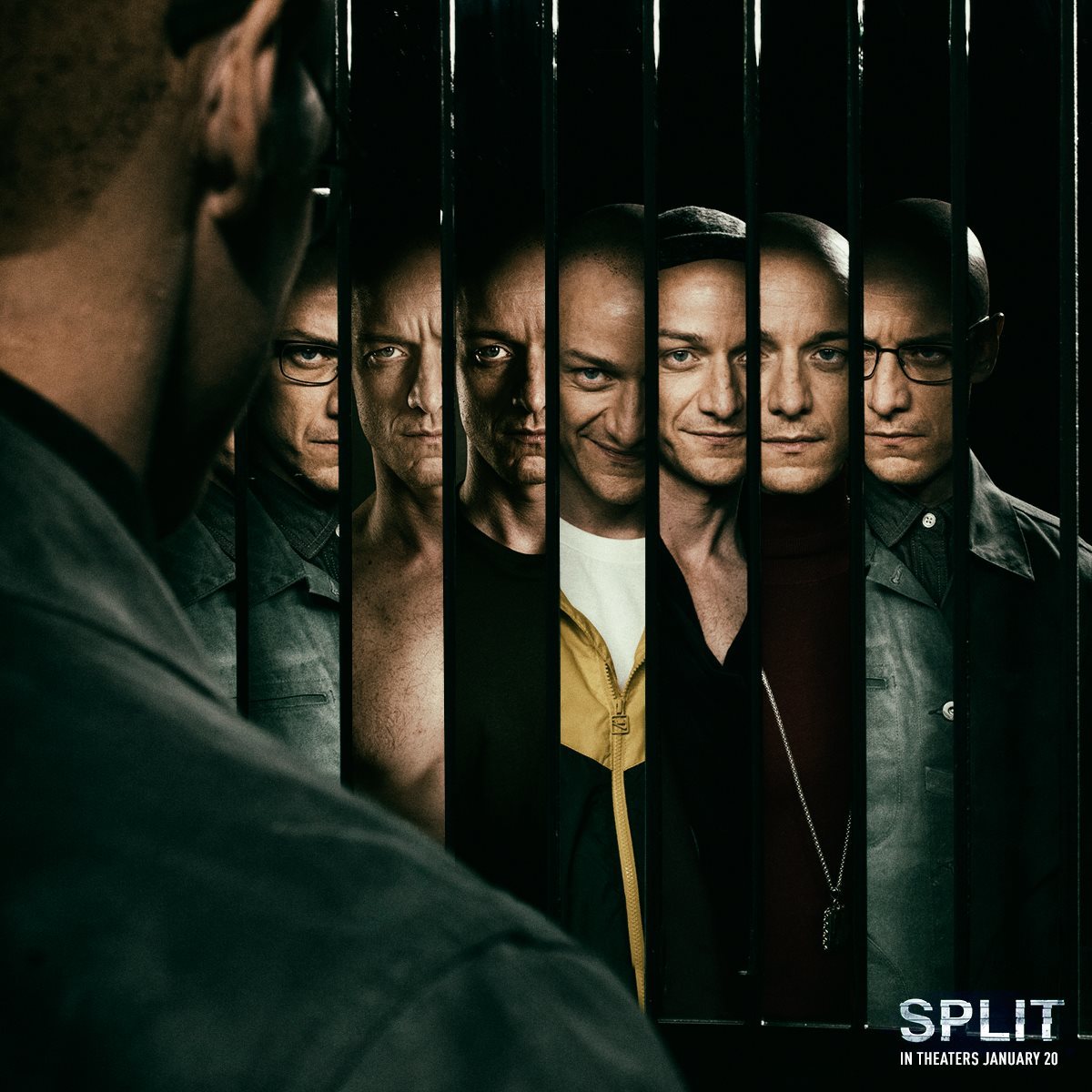
Kevin - this is the original personality who is suffering from the illness and he is scared of the actions of his other personalities
Barry - this is Kevin's dominant personality who spends the majority of the time in control and speaks to the therapist who looks to help. He is a flamboyant fashion expert
Jade - she is a diabetic who must take insulin shots which helps us to recognise the differences in mental and physical attributes between all of the personalities
Orwell - seems to be a scholar Central Asian history who brings up facts about the Ghurid Empire in a video log on Kevin's computer
Dennis - he suffers from OCD and has sexual impulses which include a desire to watch young girls dance naked. He is the kidnapper of three young girls however he is orchestrated by Patricia
Hedwig - he is a 9 year old boy who is emotional and totally obsessed with Kanye West and drawing. He is scared and excited by the idea of a scary character called the Beast who is soon to join the personalities and is also stuck between whether to help one of the girls escape or not
Patricia - an older lady who is softly spoken and is believed to be from the middle or upper class of society however is mentally unstable. She is pivotal in welcoming the beast and dominates characters such as Dennis and Hedwig
The Beast - this is the 24th personality and appears at the end of the film. This character is beyond human and looks to kill anything or cause suffering to those that haven't experienced severe suffering.
Kevin - this is the original personality who is suffering from the illness and he is scared of the actions of his other personalities
Barry - this is Kevin's dominant personality who spends the majority of the time in control and speaks to the therapist who looks to help. He is a flamboyant fashion expert
Jade - she is a diabetic who must take insulin shots which helps us to recognise the differences in mental and physical attributes between all of the personalities
Orwell - seems to be a scholar Central Asian history who brings up facts about the Ghurid Empire in a video log on Kevin's computer
Dennis - he suffers from OCD and has sexual impulses which include a desire to watch young girls dance naked. He is the kidnapper of three young girls however he is orchestrated by Patricia
Hedwig - he is a 9 year old boy who is emotional and totally obsessed with Kanye West and drawing. He is scared and excited by the idea of a scary character called the Beast who is soon to join the personalities and is also stuck between whether to help one of the girls escape or not
Patricia - an older lady who is softly spoken and is believed to be from the middle or upper class of society however is mentally unstable. She is pivotal in welcoming the beast and dominates characters such as Dennis and Hedwig
The Beast - this is the 24th personality and appears at the end of the film. This character is beyond human and looks to kill anything or cause suffering to those that haven't experienced severe suffering.
Thursday, 14 September 2017
Short Film Budgets
The majority of short films are kept to a low budget and are often financed through people's personal savings. This is because the films last a short period of time and usually don't require much financial backing. The directors and cast are normally just experimenting and are not looking to make any financial gain or get any awards. However some budget is usually required for props, clothing and to rent out particular scenes for filming. Of course this cost is usually limited depending on the financial resources available.
Examples
http://filmmakermagazine.com/96844-10-lessons-learned-while-making-my-first-short-film-budget/#.WbpbebKGPcc
Examples
http://filmmakermagazine.com/96844-10-lessons-learned-while-making-my-first-short-film-budget/#.WbpbebKGPcc
Wednesday, 13 September 2017
Schizophrenia Research
Symptoms of schizophrenia
Symptoms of schizophrenia include:
- hallucinations – hearing or seeing things that don't exist
- delusions – unusual beliefs not based on reality
- muddled thoughts based on hallucinations or delusions
- changes in behaviour
Some people think schizophrenia causes a "split personality" or violent behaviour. This is not true.
The cause of any violent behaviour is usually drug or alcohol misuse.
Causes of schizophrenia
The exact cause of schizophrenia is unknown. However, most experts believe the condition is caused by a combination of genetic and environmental factors.
It's thought that some people are more vulnerable to developing schizophrenia, and certain situations can trigger the condition.
Treating schizophrenia
Schizophrenia is usually treated with a combination of medication and therapy tailored to each individual. In most cases, this will be anti-psychotic medicines and cognitive behavioural therapy (CBT).
People with schizophrenia usually receive help from a community mental health team, which offers day-to-day support and treatment.
Many people recover from schizophrenia, although they may have periods when symptoms return (relapses). Support and treatment can help reduce the impact the condition has on daily life.
Living with schizophrenia
If schizophrenia is well managed, it's possible to reduce the chance of severe relapses.
This can include:
- recognising the signs of an acute episode
- taking medication as prescribed
- talking to others about the condition
There are many charities and support groups offering help and advice on living with schizophrenia. Most people find it comforting talking to others with a similar condition.
Tuesday, 12 September 2017
Question and Answer
How is the film going to start? Is it going to start in Media res in a counselling session?The idea for the start of the film is that the audience join in the middle of the counselling session in order for the audience to see that they are unable to be treated properly by doctors, as they will be having the counselling sessions, but the hallucinations will still be happening around them.
Is it going to be a documentary style?The film will not be in a documentary style. Even though the film has an educational message the film will take the shape of a drama in order to show the mental illness in a real life situation.
What different schizophrenic personalities will the character have?The different schizophrenic personalities we believe will be portrayed are: a young girl, an elderly man, a younger male who is a drug user/hippie and a person from an ethnic minority group. This is done in order for the personalities to both contrast and compliment each other due to them all living in one society, but all having contrasting beliefs on the world they live in (so that the main protagonist is unable to actually collect his thoughts.
Is it going to be a documentary style?The film will not be in a documentary style. Even though the film has an educational message the film will take the shape of a drama in order to show the mental illness in a real life situation.
What different schizophrenic personalities will the character have?The different schizophrenic personalities we believe will be portrayed are: a young girl, an elderly man, a younger male who is a drug user/hippie and a person from an ethnic minority group. This is done in order for the personalities to both contrast and compliment each other due to them all living in one society, but all having contrasting beliefs on the world they live in (so that the main protagonist is unable to actually collect his thoughts.
Friday, 8 September 2017
Thursday, 13 July 2017
In a Heartbeat
Mise en Scene
The theme of this short film can be represented through the use of mise en scene. For example the fact that the teenagers are dressed presentably and smartly this goes against the dominant ideology of Hegemony as he states that only the dominant ideology is reflected. In this case that is not true as the teens do not follow the dominant view that they are scruffy. The use of books as props further shows them to be intellectuals which I imagine is not a general view of the youth of society. This can be seen too follow Gauntlett's message of media messages being divers and contradictory.
Sound
Sound is a further example of the contradiction in this short film to the representation which is common. The non diagetic soundtrack can be seen as soft and mellow which does not usually associate with younger characters. However it intensifies and becomes more panicky as the boys love is expressed for the other boy in front of the rest of the school. This sign of homosexuality is subject to Stan Cohens representation theory which is showing something such as homosexuality to be a threat to societal values or interests.
Editing
The use of editing in this short film can be seen to conform to Gauntlett's representation theory by using an animated heart. This heart is a sign of compassion from one boy to another which of course in today's can be seen as contradictory and a diverse message from the media. Furthermore the two boys being pictured holding the animated heart at the end can be seen as negotiated reading as the audience is highly likely to agree as well as disagree with the text.
Camera
The use of close ups on the two different boys shows two different sets of emotions with the ginger boy being out of control and in a state of panic as his heart races off for the other boy. Whereas the dark haired boy is cool and collected yet becomes puzzled when he is confronted by the heart of the ginger boy. Stan Cohen's representation theory that cultures are subject to moral panic when a group of people have been defined as a threat to societal values as when their emotions are shown in school it is looked down upon and isn't normal.
Tuesday, 11 July 2017
Audience Theory
Demographic - physical differences amongst audiences
Psychographic - difference in interests amongst audiences
Stuart Hall - texts are encoded with a message that suits society which is then decoded by the audience and interpreted in three different ways
- The audience seeks pleasure from the text so chooses to consume it e.g.
> escapism > comparing
> diversion > sexual stimulation
> information
> counter cultural experiences
Why would an audience watch a short film?
An audience would be likely to watch a short film for a number of different reasons which are all listed under the Uses and Gratifications Theory which was set out by Blumer and Kats. They argued that the audience sought pleasure when consuming a text so they chose to watch it rather than being consumed by the text. This list of reason ranges from a sense of escapism all the way up to sexual stimulation.
What meaning would and audience take from the film?
Psychographic - difference in interests amongst audiences
Stuart Hall - texts are encoded with a message that suits society which is then decoded by the audience and interpreted in three different ways
- DOMINANT READING - interpreted as the institution intended
- NEGOTIATED READING - audience agrees and disagrees with the text
- OPPOSITIONAL READING - audience is in conflict with the text
- The audience seeks pleasure from the text so chooses to consume it e.g.
> escapism > comparing
> diversion > sexual stimulation
> information
> counter cultural experiences
Why would an audience watch a short film?
An audience would be likely to watch a short film for a number of different reasons which are all listed under the Uses and Gratifications Theory which was set out by Blumer and Kats. They argued that the audience sought pleasure when consuming a text so they chose to watch it rather than being consumed by the text. This list of reason ranges from a sense of escapism all the way up to sexual stimulation.
What meaning would and audience take from the film?
Wednesday, 5 July 2017
Representation Theory
Dominant Ideology - views, messages, values projected and held by mainstream society
Gramsci's Hegemony - representation is unequal, dominant ideology reflected
Stan Cohen - cultures are subject to moral panic when a group of people have been defined as a threat to societal values or interests
Gary Giddens - representation experiences make us reflect upon and rethink our own self narrative in relation to others
Gauntlett - media messages are diverse, diffuse and contradictory, resources people use to think through their sense of self
Berger - "men look women appear" women are there solely for objectification of men
Bell Hooks - lighter skinned women are considered more desirable and fit better into western ideology of culture, women are objectified and sexualised in hip-hop
Star Power - institutions use films stars to attract large audiences
Tessa Perkins Stereotypes
I believe that the short film 'I Miss You' links well to Gauntlett's representation theory about media messages being diverse and contradictory. This is the case as the man in this short film is seen to be the sensitive and emotional character which isn't usually the case as the woman normally has these characteristics. This gets viewers to think again about the representation of men usually being cool and insensitive.
Gramsci's Hegemony - representation is unequal, dominant ideology reflected
Stan Cohen - cultures are subject to moral panic when a group of people have been defined as a threat to societal values or interests
Gary Giddens - representation experiences make us reflect upon and rethink our own self narrative in relation to others
Gauntlett - media messages are diverse, diffuse and contradictory, resources people use to think through their sense of self
Berger - "men look women appear" women are there solely for objectification of men
Bell Hooks - lighter skinned women are considered more desirable and fit better into western ideology of culture, women are objectified and sexualised in hip-hop
Star Power - institutions use films stars to attract large audiences
Tessa Perkins Stereotypes
- not always negative
- not always about minorities
- can be held about own group
- can change
- not always false
Dyer Stereotypes - always about power, those with power stereotype those with less power
I believe that the short film 'I Miss You' links well to Gauntlett's representation theory about media messages being diverse and contradictory. This is the case as the man in this short film is seen to be the sensitive and emotional character which isn't usually the case as the woman normally has these characteristics. This gets viewers to think again about the representation of men usually being cool and insensitive.
Monday, 3 July 2017
Textual Analysis - Tick Tock
Camera
·
Low angle shows significance of the box
·
Tracking shot – intensity
·
Hand held shot - disequilibrium
|
Editing
·
Long take – no time to think, death
·
Subtitles – help to decode narrative
·
Credits at the start – reverse chronology
|
Sound
·
Heart beat – adrenaline
·
Synchronous sound – closed
·
Tik tok – link to change in equilibrium
|
Mise en scene
·
Clock – visual representation of the reverse
of time
·
Morpheme pills and box helped to drive the
narrative
|
Todorovs theory of equilibrium was not evident in the short film Tik Tok as it didn't follow a conventional, linear story arc. Instead, a reverse chronological narrative was established through the use of editing. For example the subtitles help to decode the narrative as otherwise we would be unable to understand what is going on due to the reverse of time. Also the use of titles such as "cowardess" personify the new equilibrium which is being created. The credits at the start of the film are also a giveaway of the narrative as it can show that the film is in reverse chronology by reversing the order of the film. The use of a long take throughout the short film suggests that he has no time to think as death appears to be imminent for the character.
The short film has a closed narrative, as theorised by Barthes, as the meaning is clear and resolved at the end. Barthes also theorised that an enigma code is crucial in engaging an audience in a narrative which is created through the use of sound. For example the use of syncronous sound in Tik Tok links to Barthes' theory of a closed narrative as ther is only one obvious ending which is him realising it was all a joke and that he is not dying. The sound tik tok which is being made by the clock engineers a link to Todorovs Equilibrium Theory as there is a change of equilibrium in the short film. The non diagetic heartbeat which is used as the character panics can be seen as an effect of the disruption in the equilibrium as he is stressing thus pumping him with adrenaline.
Bordwell and Thompson state that a narrative is the product of a cause and effect relationship, and this can be seen through the use of key props used in the mise en scene such as the morphene pills. The pills are a cause that lead to the effect of him running through the campus which helps to drive the narrative and help reach a conclusion. The box can aslo be seen as a prop which helps to drive the narrative as he pursues a desire to give the box to his girlfriend. Also the clock which is ticking anti-clockwise can be seen as a visual representation of the reverse of time - visual evidence of the use of reverse chronology in this short film.
Narratve Theory
Todorovs Equilibrium Theory
Linear Narrative

Linear Narrative
- Starts from the beginning
- Continues to middle events
- Ends with the end
- Follows a timeline of past, present, future
- Does not always start at the beginning
- No set timeline so often jumps around
- Moves around from events in the story
Barthes' Theory of Narrative
OPEN - can be unravelled and have several different meanings or potential outcomes
CLOSED - only one obvious ending to the story
ENIGMA CODE - a question which is asked at the start of the film and answered at the end in order to kep the audience hooked on what a potential answer could be
Bodwell and Thompson
"narrative consists of a chain of events - every cause leads to an effect"
Reverse Chronology
a method of story telling whereby the plot of the story is revealed to the audience at the beginning of the film itself
Genre Theory
Barry Keith Grant - he stated that all genres are divided up into sub genres which allows them to be more specific and stand out more to audiencs therefore making them more recognisable to a niche market such as short film enthusiasts
Steve Neal - he said that genres are indications of repetitons and differences
Steve Neal - he said that genres are indications of repetitons and differences
Subscribe to:
Posts (Atom)